Case Study | TurnEsto
Bringing Real-Time Visibility and Operational Order to Property Turnover Management
A centralised property operations platform that eliminates manual coordination and gives property managers full visibility into every service, vendor, and turnover workflow in real time.
5 min read
Property turnover is one of the most operationally intensive processes in property management. Every vacant unit represents a cost, and the speed at which that unit is cleaned, repaired, inspected, and made ready for the next occupant has a direct bearing on revenue. When that process depends on phone calls, manual scheduling, and informal vendor coordination, delays are not occasional. They are structural.
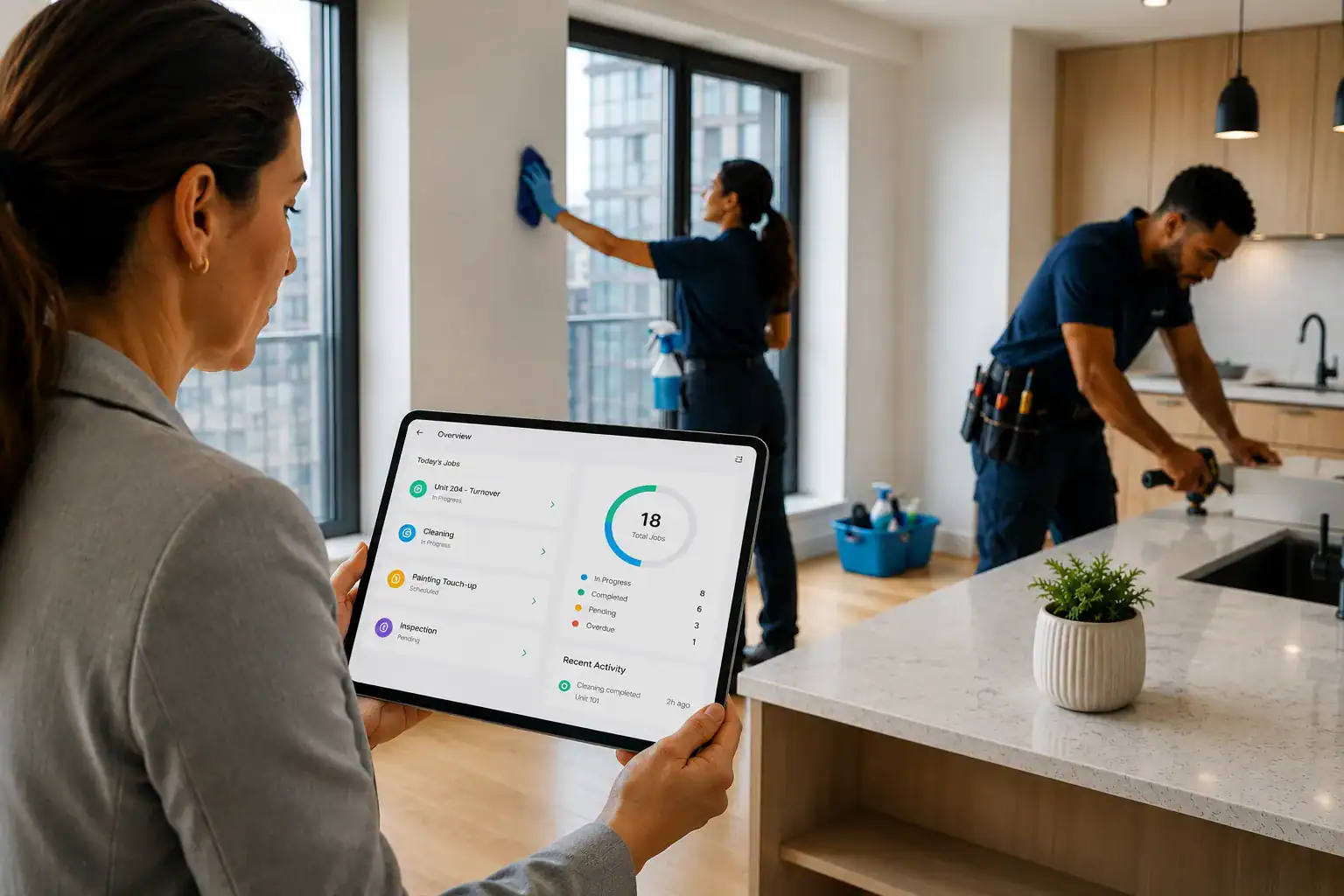
Turnesto was built to eliminate that structure of delay. The platform was conceived as a centralised operations hub through which property managers and vendors could schedule services, assign tasks, track job progress in real time, and maintain full visibility into the status of every turnover and maintenance operation across their portfolio.
The engagement covered mobile application development, backend architecture, vendor and property manager portal implementation, real-time job tracking, and cloud deployment, delivered over approximately four and a half months by an eight-person cross-functional team. The result was a live iOS platform that took property turnover management from fragmented and manual to centralised, transparent, and operationally efficient.
The Engineering Impact
Real-Time Operations. Zero Coordination Gaps.
4.5 months
End-to-end delivery duration
iOS Live
Launched on App Store
End-to-End
Mobile, backend, workflow automation, and cloud infrastructure delivered
The Challenge
Property management operations at scale involve a large number of moving parts, multiple service categories, multiple vendors, multiple properties, and a coordination overhead that grows with every unit added to the portfolio. Without a platform purpose-built for this operational context, the default is fragmentation, and fragmentation in property management means delayed unit readiness, reduced revenue, and frustrated stakeholders on every side of the process.
The challenges Turnesto was built to address were operational, communicational, and technological, spanning every stage of the service coordination workflow. The core challenges were:
- 1. Manual Coordination Was Creating Systematic Delays.
- Service scheduling across cleaning, painting, floor care, and maintenance was being managed through informal communication channels, creating a coordination overhead that introduced delays at every stage of the turnover process and made it impossible to manage multiple properties efficiently at scale.
- 2. Property Managers Had No Real-Time Visibility Into Job Progress.
- Without a centralised tracking system, managers had no reliable way to know the status of work in progress across their portfolio. Updates depended on vendor communication, which was inconsistent, and visibility gaps meant that problems were identified late and resolved later.
- 3. Vendor Accountability Was Difficult to Enforce Without Structured Tracking.
- The absence of a formal job tracking and reporting system made it difficult to hold vendors accountable for service quality, completion timelines, and task requirements. Performance was difficult to measure and even more difficult to improve.
- 4. Fragmented Communication Between Stakeholders Slowed Every Decision.
- Property managers, vendors, and administrative teams were operating without a shared communication and workflow environment, forcing coordination through channels that were not designed for operational management and generating confusion at every handoff point.
- 5. Service Records and Job History Were Not Systematically Maintained.
- Without a structured platform for logging service activity, job history was incomplete, reporting was manual, and the data needed to make informed decisions about vendor performance and operational efficiency simply did not exist in an accessible form.
- 6. The Platform Needed to Serve Two Distinct User Types Within a Single System.
- Property managers and vendors have different operational needs, different levels of system access, and different workflow requirements. Building a platform that served both audiences effectively within a single, cohesive application required careful role-based design thinking from the outset.
The cumulative effect was a property management operation running on informal processes that could not scale, could not be measured, and could not be improved without first being made visible.
The Objective
- Centralise Service Scheduling and Vendor Coordination Into a Single Platform. Build a unified operational environment through which property managers could schedule services, assign vendors, and manage the full turnover workflow without dependence on informal communication channels.
- Deliver Real-Time Job Tracking and Status Visibility Across the Portfolio. Develop a job tracking system that gave property managers accurate, real-time visibility into the progress of every service in execution, eliminating the visibility gaps that had been causing delays and reducing accountability.
- Create Structured Vendor Management and Task Allocation Workflows. Build the vendor assignment, task allocation, and approval-based onboarding capabilities needed to bring structure and accountability to the vendor relationships at the centre of property turnover operations.
- Automate Operational Workflows to Reduce Manual Coordination Overhead. Identify and automate the manual coordination steps consuming operational capacity, replacing informal processes with structured workflows that reduced turnaround times and improved service execution consistency.
- Build Reporting and Performance Tracking Into the Core Platform Experience. Develop dashboards and reporting capabilities that gave property managers access to the operational data needed to track performance, identify inefficiencies, and make informed decisions about vendors and service categories.
- Deliver a Scalable Architecture Supporting Multiple Properties and Service Categories. Architect the platform to support growth across an expanding property portfolio and service offer, ensuring that operational complexity could increase without a corresponding increase in coordination overhead.
The Solution
A Property Operations Platform Built for the Pace and Complexity of Real-World Service Coordination
The platform was developed to serve two distinct user audiences within a single, role-aware application, with every feature designed to reduce coordination friction and increase operational transparency at each stage of the property turnover and maintenance workflow.
- Service Booking and Scheduling Management Built for Operational Efficiency. A comprehensive service booking and scheduling system was developed to allow property managers to initiate, schedule, and manage turnover and maintenance services across cleaning, painting, floor care, and trash removal within a single, structured workflow environment.
- Vendor Assignment and Approval-Based Onboarding. Vendor assignment and task allocation capabilities were built with a structured onboarding and approval process that brought accountability into the vendor relationship from the point of entry, ensuring that the platform’s service provider network met the operational standards property managers required.
- Real-Time Job Progress Tracking and Status Updates. A real-time job tracking system was implemented to give property managers live visibility into the status of every service in progress, with status updates and workflow monitoring capabilities that eliminated the information gaps previously driving delays and miscommunication.
- Push Notifications and Activity Alerts for Proactive Coordination. Firebase Cloud Messaging was integrated to deliver timely push notifications and activity alerts to both property managers and vendors, ensuring that updates, assignments, and status changes were communicated immediately without relying on manual follow-up.
- Performance Reporting Dashboards and Job History. Dedicated reporting dashboards and comprehensive job history records were developed to give property managers the operational data needed to track vendor performance, monitor service completion rates, and make informed decisions about their property operations.
- Role-Based Access Control for a Multi-Stakeholder Platform. A role-based access management framework was implemented to ensure that property managers and vendors each had access to the capabilities and information appropriate to their role, supporting both operational security and the practical workflow requirements of a multi-stakeholder platform.

The Impact
- Property Turnover Workflows Were Successfully Digitalised. The manual, phone-based coordination processes that had previously governed property turnover operations were replaced by a structured, centralised digital workflow that brought order, speed, and accountability to every stage of the service execution process.
- Dependency on Manual Scheduling and Communication Was Materially Reduced. Automated workflow capabilities absorbed the coordination overhead that had previously consumed management capacity, reducing the time and effort required to initiate, assign, and track services across the property portfolio.
- Property Managers Gained Real-Time Operational Visibility. The job tracking and status update capabilities gave managers accurate, live visibility into work in progress across their portfolio, eliminating the information gaps that had been causing delays and making proactive management of service execution genuinely possible for the first time.
- Vendor Coordination Became Faster and More Accountable. Structured task allocation, approval-based onboarding, and job tracking created a vendor management environment in which performance was visible, accountability was built into the workflow, and coordination happened within the platform rather than around it.
- Service Completion Tracking and Reporting Became Systematic. Job history records and reporting dashboards gave property managers access to the operational data that had previously been unavailable, enabling performance measurement and data-informed decisions about vendors, service categories, and operational priorities.
- A Scalable Foundation Was Established for Portfolio Growth. The platform architecture supports future expansion into advanced property analytics, automated scheduling, vendor performance scoring, and enterprise-scale portfolio management, ensuring that Turnesto can grow with the operational ambitions of the property management organisations that depend on it.

Every Day a Unit Sits Vacant Is a Day of Revenue Lost. We Built the Platform That Gets It Ready Faster.
Centralised operations, real-time visibility, and structured vendor coordination, delivered in a single platform built for the pace of modern property management.

Related Stories