Skip to content
Table of Contents
Global travel platforms operate under one of the most demanding availability standards in the technology sector. At any moment, travelers across continents are booking flights, confirming hotel stays, checking in for departures, or receiving real-time itinerary updates. Statista estimates that global online travel bookings surpass $800 billion annually, with peak digital transactions occurring literally every second across international time zones. These transactions occur continuously, without regard for regional business hours or technical maintenance windows, requiring Managed Service Providers (MSPs) to maintain round-the-clock operational oversight to ensure uninterrupted performance.
For airlines, online travel agencies (OTAs), hospitality groups, and mobility providers, uninterrupted application performance is not optional. It is foundational to revenue, customer satisfaction, and operational continuity. Research from Google Cloud shows that even a 1-second delay in page response can reduce conversion rates by up to 20%, turning performance instability into immediate financial loss.
Travel applications must deliver seamless digital experiences while navigating unpredictable demand surges, cross-border data obligations, complex integrations with third-party partners, and an ever-expanding cybersecurity threat landscape. According to Gartner, more than 80% of customer interactions in travel now occur digitally, raising expectations for always-available booking, check-in, and support platforms. Even brief outages can disrupt payment flows, generate booking backlogs, damage brand trust, and create cascading operational costs across supplier networks.
This is where Managed Service Providers (MSPs) become mission-critical partners. MSPs deliver the expertise, staffing, and technology frameworks required to ensure continuous availability, performance optimization, security protection, and scalability across globally distributed platforms. By managing everything from cloud infrastructure orchestration to security incident response, MSPs provide travel enterprises with operational continuity that internal IT teams alone often struggle to maintain. IDC research shows that organizations leveraging managed services achieve up to 45% faster incident resolution times compared to internally operated models.
This comprehensive guide explores how MSPs enable round-the-clock reliability for travel applications and why they have become indispensable to the modern travel technology landscape.
The Global Availability Challenge in Travel Technology
Unlike retail or enterprise platforms that operate within predictable business hours, travel systems experience rolling peaks 24/7 as daily demand follows the sun. Asia-Pacific peaks while North America sleeps, Europe surges as APAC tapers off, and traffic shifts again toward the Americas before cycling globally.
Key operational challenges include:
- Unpredictable demand spikes driven by flash fare promotions, seasonal travel peaks, cancellations, and weather disruptions (Akamai notes that travel platforms may see traffic bursts exceeding 300–500% of daily averages during crisis or promotion events).
- Real-time transaction dependencies, including payment processing, inventory reservation, ticketing updates, and partner APIs.
- Complex global integrations involving airlines, hotels, transport operators, insurers, and government entry systems.
- Near-zero tolerance for downtime, especially during booking and airport check-in windows. According to Gartner, the average cost of IT downtime exceeds $5,600 per minute, with travel enterprises often exceeding this due to revenue transaction loss.
- Stringent cross-border compliance requirements handling regulated customer identity and financial data.
In such an always-active environment, MSPs are responsible for maintaining uninterrupted technical performance at global scale.
Global Monitoring and 24/7 Network Operations
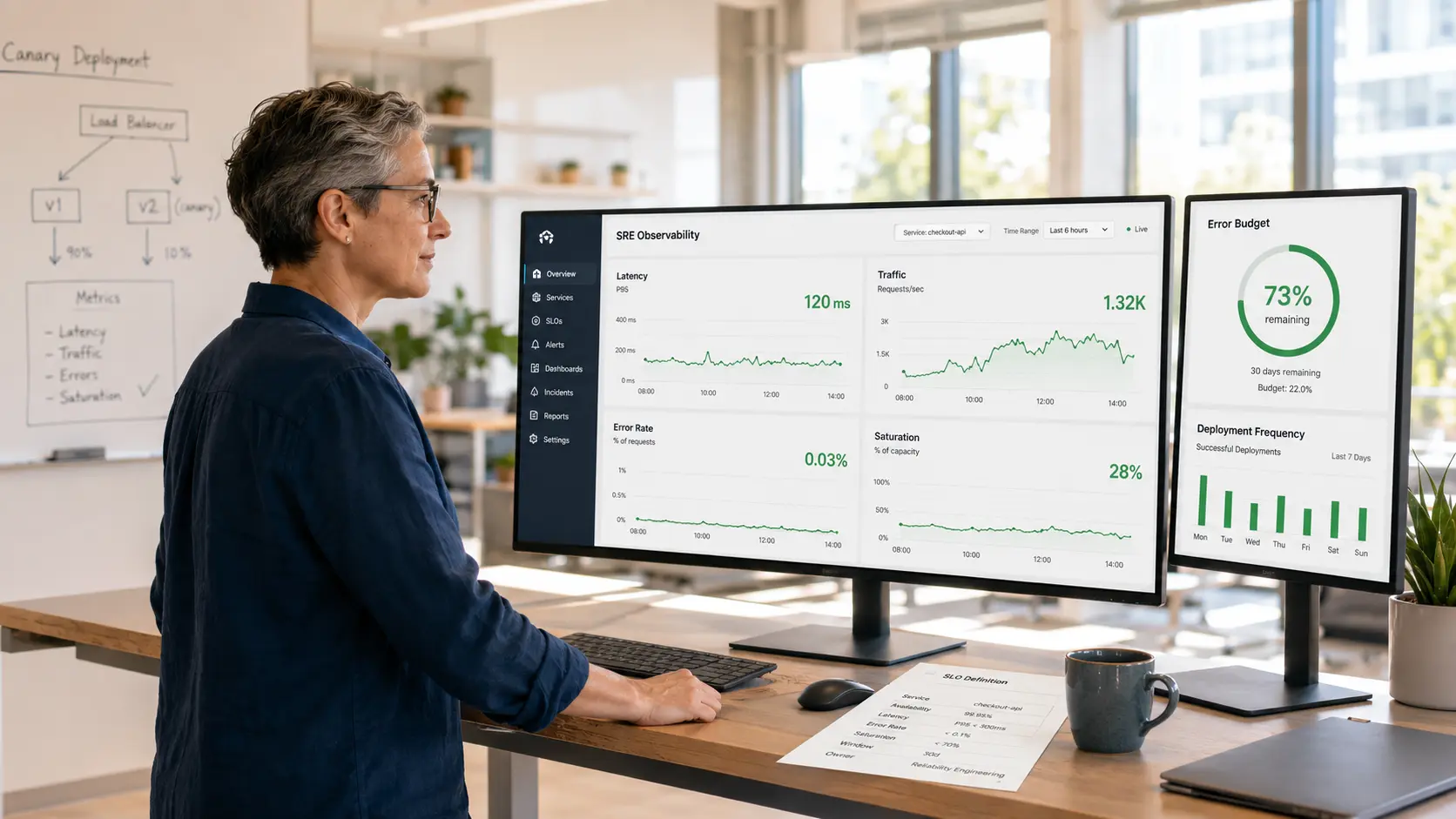
MSPs operate distributed Network Operations Centers (NOCs) staffed worldwide to ensure constant oversight. These teams monitor:
- Application availability and uptime
- API response latency
- Database throughput and query performance
- End-user experience metrics
- Infrastructure utilization
- Transaction success rates
Using unified dashboards, MSPs correlate signals across cloud platforms, content delivery networks (CDNs), application layers, and physical infrastructure.
Predictive Monitoring
Modern MSP platforms increasingly leverage:
- AI-driven anomaly detection, which identifies abnormal system behavior before service degradation becomes visible.
- Predictive capacity modeling, enabling proactive scaling ahead of demand peaks.
- Log correlation analytics connecting cascading failures across microservices.
Gartner reports that organizations using predictive IT monitoring experience up to 60% fewer major outages annually, demonstrating the effectiveness of prevention-first operations.
Cloud Infrastructure Management Across Regions
Travel applications rely heavily on cloud platforms for elasticity and geographic reach. MSPs design and operate resilient multi-cloud and hybrid architectures that ensure uptime while meeting local compliance mandates.
Key cloud responsibilities include:
- Geo-redundancy: Active-active deployments across cloud regions provide automatic failover. Multi-region architectures reduce outage risk by up to 99.999% availability, according to AWS reliability studies.
- Latency optimization: CDN edge caches and global load balancers reduce response times. Content proximity can deliver 30–50% faster performance improvements, according to Akamai.
- Auto-scaling: Infrastructure scales instantly during booking surges and matched down during lulls.
- Cost management: MSPs continuously adjust compute usage to prevent both overprovisioning and shortfalls. IDC found managed cloud optimization programs reduce infrastructure costs by an average of 25–30%.
This high-availability engineering allows enterprises to meet strict SLA commitments while managing financial efficiency.
Proactive Incident Detection and Response
Reactive troubleshooting is not enough for travel platforms, where customer impact equals instant revenue loss. MSPs operate with proactive detection frameworks built on:
- Real-time telemetry collection
- Distributed microservice tracing
- AI-powered performance baselining
- Synthetic user journey testing
These approaches flag early signals of latency drops, memory leaks, API failures, or network bottlenecks before customers encounter errors.
24/7 Incident Response Playbooks
When incidents occur, MSP response protocols follow standardized escalation:
- Immediate alerting and triage
- Impact isolation
- Automated mitigation actions (service restarts, reroutes, scaling)
- Performance verification
- Root cause analysis and documentation
With globally distributed response crews, MSPs deliver mean-time-to-resolution (MTTR) measured in minutes rather than hours. Gartner estimates that companies using MSP-led operations achieve 35–50% faster restoration times than in-house teams operating limited-hour support models.
Time-Zone Orchestration and Workforce Continuity
Managing IT operations across global time zones introduces staffing complexity many enterprises cannot sustain independently. MSPs solve this with follow-the-sun delivery models operating across APAC, EMEA, and the Americas.
Key practices include:
- Detailed shift handover briefings
- Unified ticket escalation frameworks
- Real-time collaboration across regions
- Runbook-driven troubleshooting
IDC research shows that distributed support models reduce unresolved incidents due to staffing gaps by more than 40%, ensuring uninterrupted operational coverage.
Security Operations and Continuous Compliance
Travel platforms store large volumes of sensitive data:
- Personally identifiable information (PII)
- Passport and itinerary records
- Payment credentials
- Loyalty data
This makes them prime cyber targets. According to IBM Security’s Cost of a Data Breach Report, the average breach in the travel sector costs organizations over $4 million per incident, excluding brand damage and regulatory penalties.
MSPs operate dedicated Security Operations Centers (SOCs) staffed around the clock using:
- SIEM platforms
- Intrusion detection systems
- Endpoint threat protection tools
- Behavioral analytics
Akamai reports that travel websites experience some of the highest bot and DDoS attack rates, with travel accounting for over 25% of all credential stuffing attempts globally. MSP-managed SOC teams provide continuous detection and mitigation capability at scale.
Compliance Management
Regulatory frameworks including PCI DSS, GDPR, ISO 27001, SOC 2, and regional sovereignty laws require constant controls. MSP frameworks automate:
- Policy enforcement
- Security patch orchestration
- Data encryption management
- Compliance auditing
Organizations running compliance programs through MSP platforms reduce audit remediation costs by up to 35%, according to IDC, while maintaining year-round compliance readiness.
Building Elastic Scalability for Travel Market Volatility
Travel demand is among the most volatile of any industry. MSP engineering teams design elasticity into application stacks via:
- AI-based demand forecasting
- Automated provisioning workflows
- Serverless computing for transactional bursts
This allows platforms to survive:
- Holiday traffic peaks
- Flash travel sales
- Crisis-driven surges (weather events, strikes, border disruptions)
Gartner notes that elastic cloud architectures enabled by MSPs improve peak capacity delivery by over 70% without permanent infrastructure expansion, protecting revenue while controlling long-term costs.
Strategic Value for CIOs and CTOs
For travel technology executives, MSP partnerships drive measurable business outcomes:
Risk Reduction
Predictive monitoring reduces disruptions, preventing revenue-impacting outages.
Operational Cost Optimization
MSPs eliminate internal 24/7 staffing needs while optimizing infrastructure usage, delivering 20–30% lower total IT operations costs (IDC).
Accelerated Innovation
Internal teams can focus on:
- Platform modernization
- AI personalization initiatives
- CX improvements
- Market expansion
Enhanced Security Posture
Always-on SOC protection offers enterprise-grade cybersecurity coverage at a fraction of in-house operational cost.
Enabling the Next Generation of Travel Technology
Emerging innovations such as:
- AI-driven airfare personalization
- Biometric identity check-ins
- Dynamic pricing engines
require ultra-low latency platforms, real-time analytics, and continuous availability. MSPs make these capabilities scalable and secure by:
- Maintaining resilient multi-region infrastructure
- Managing compliance across global jurisdictions
- Securing sensitive identity and payment data
- Guaranteeing business continuity even during large-scale disruptions
Conclusion: MSPs as the Backbone of Always-On Travel Platforms
Keeping travel applications operational across international time zones requires technical excellence, geographic scale, and continuous vigilance. These capabilities are best delivered by Managed Service Providers.
Through predictive monitoring, cloud infrastructure orchestration, proactive incident response, cybersecurity enforcement, compliance management, and elastic performance engineering, MSPs ensure that travel platforms remain resilient at all times.
For CIOs and CTOs navigating today’s digital travel economy, MSP partnerships are no longer optional. They are foundational to sustaining availability, protecting customer trust, and enabling long-term growth.
In the always-on world of travel technology, MSPs do more than manage infrastructure. They keep global mobility moving.
Ready to see how Zazz can transform your IT operations? Schedule a consultation with our enterprise IT specialists today.